
Active Sussex County Warrants
Sussex County warrants come from the courts that hear the underlying case. Superior Court issues warrants in felony matters. The Court of Common Pleas issues bench warrants and capias orders in misdemeanor and traffic appeals. Justice of the Peace Court issues warrants in minor criminal, landlord tenant contempt, and many non-felony traffic matters. Family Court issues warrants in protection from abuse, juvenile, and family contempt matters. The Sussex County Sheriff serves court papers and conducts sheriff sales, and it does not issue or maintain a public list of active warrants.
No official Sussex County public warrant database has been located. The Sussex County Sheriff's Office page does not publish a warrant lookup. The Delaware State Police does not run a county warrant portal for Sussex. A user who wants to confirm a warrant therefore has to identify the issuing court first and then contact that clerk directly. This is the practical reality across all five Sussex trial courts.
Sussex County Sheriff Warrant Scam Warning
The Sussex County Sheriff's Office has issued a direct warning about phone scams. Callers impersonate sheriff deputies, spoof the office's real number on caller ID, and demand payment to clear a fake warrant. The official Sheriff page is clear that the office will never ask for money over the phone.
Warning: The Sussex County Sheriff will never call to demand payment over the phone for a warrant. If a caller asks for cards or wire transfer, hang up and call the Sheriff's Office at 302-855-7830 to confirm.
If a suspected scam call comes in, hang up, confirm with the Sheriff's Office at 302-855-7830, and report the crime to local police at 302-856-5655. Do not provide bank, debit, prepaid card, or personal information to anyone claiming to be a Sussex deputy collecting on a warrant.
Types of Warrants in Sussex County
Delaware courts use several types of warrants and warrant-like orders. Each one means something different on a Sussex County case. CourtConnect lists Civil Contempt or Capias as case type M6, and protection order related entries appear under other codes such as N3 Lethal Protection Order and N4 Sexual Violence Protective Order.
- Arrest warrant - A court order, usually backed by a sworn affidavit, that authorizes law enforcement to take a named person into custody.
- Bench warrant - An order issued by a judge from the bench, often after a missed court date, that directs law enforcement to bring the person before the court.
- Capias - A Delaware order to take a person into custody for failure to appear, civil contempt, or noncompliance with a court order. CourtConnect lists this as case type M6.
- Search warrant - An order authorizing a search of a place, vehicle, person, or electronic device. Many search warrants are sealed before execution or while an investigation is active.
- Body attachment - A civil order used in some matters to compel a person's appearance, similar in effect to a bench warrant.
- Federal warrant - Issued by the U.S. District Court for the District of Delaware or by a federal magistrate, and not part of any Sussex County court record.
How to Search Sussex County Warrants
Because no public Sussex County warrant portal exists, the practical search is a call or visit to the issuing court. Start by figuring out which court would have issued the warrant. Traffic or minor criminal warrants usually come from a Justice of the Peace court. Misdemeanor and preliminary felony matters go through Court of Common Pleas. Felony warrants and most drug-offense warrants come from Superior Court. Family and protection matters come from Family Court.
- Identify the likely issuing court based on the underlying charge or case.
- Pull any case-level docket on Delaware CourtConnect using a name or Case ID. A capias entry under M6 or a bench warrant note may show on a docket.
- Call the clerk for that court in Sussex. For Superior Court call 302-855-7055, Court of Common Pleas 302-858-5700, Family Court 302-855-7400, and the relevant JP Court for traffic and minor criminal matters.
- Speak to an attorney before any voluntary surrender. The Office of Defense Services represents indigent adults and youth.
- Do not pay anyone who calls or emails about a Sussex warrant. The Sheriff does not collect over the phone.
Sussex County Public Safety and Custody Information
The federal Bureau of Prisons inmate locator is the official tool for federal custody status, which matters when a Sussex County resident is wanted on a federal warrant rather than a state warrant.
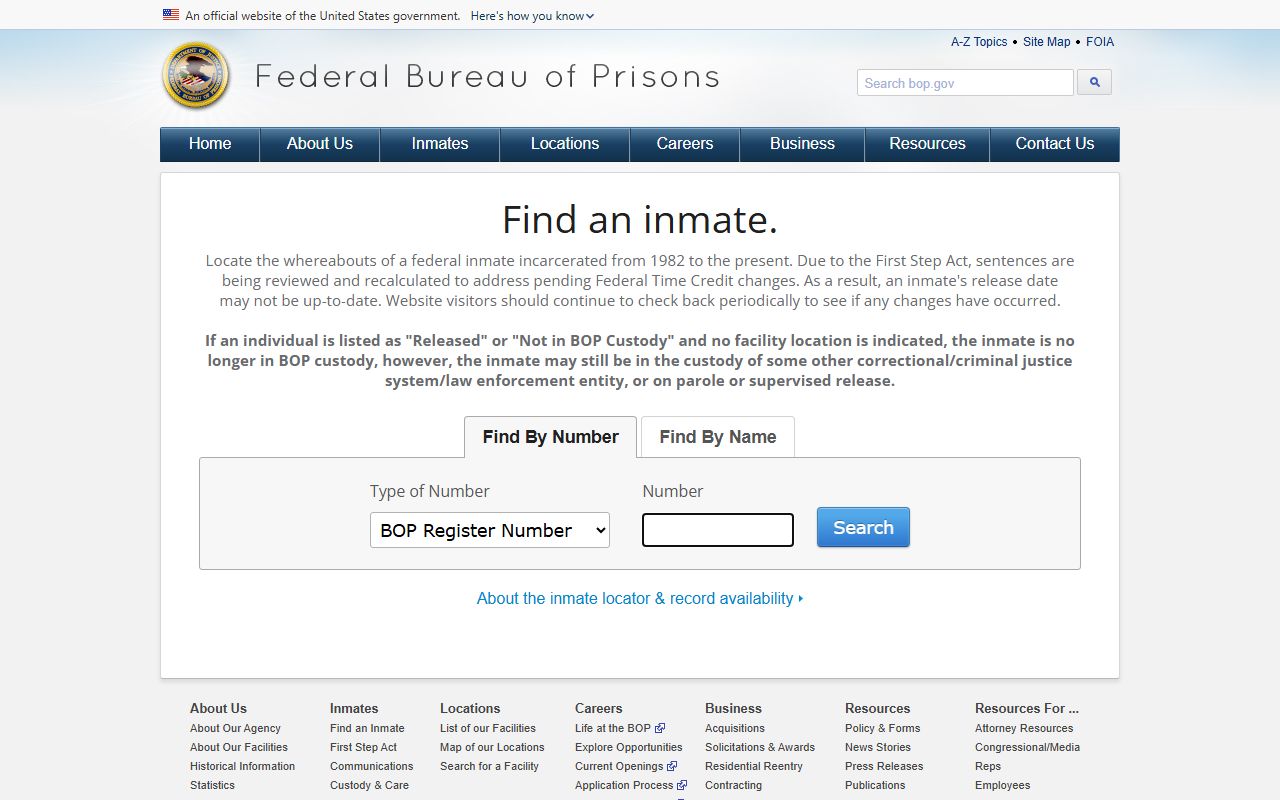
Federal warrants are not part of any Sussex County court record and do not appear in CourtConnect, so a federal hold has to be verified through federal channels.
Sussex County Warrant Search Fields
The state and county do not publish a public warrant search portal for Sussex. The table below records the absence of a portal and the practical alternatives so a reader can plan a real search without false expectations.
| Field Label | Type | Required | Notes / Format |
|---|---|---|---|
| Issuing Court | Selection | Yes | Identify Superior Court, Court of Common Pleas, JP Court, or Family Court before any inquiry. |
| Case ID | Text | If known | Helpful for a CourtConnect docket pull that may show a capias or bench warrant entry. |
| Last Name | Text | Yes for clerk lookup | Used in person or by phone with the issuing court clerk. |
| Date of Birth | Date | Often | Confirms identity when more than one person shares a name. |
| Attorney Contact | Text | Recommended | An attorney can call the court on behalf of a client without arrest exposure. |
| Online Public Portal | n/a | n/a | No official Sussex County public warrant portal located. |
What a Sussex County Warrant Record Shows
When a Sussex County warrant or capias is confirmed by the issuing court, the file usually contains the same core fields. Not all of these are released to a non-party. The actual content available to the public depends on whether the warrant is sealed and whether the underlying file is restricted.
| Field | What It Shows |
|---|---|
| Warrant or Capias Number | The unique identifier for the order, separate from the case number in some courts. |
| Issue Date | The date the judge signed the order. |
| Issuing Court | Superior Court, Court of Common Pleas, Family Court, or a Justice of the Peace court. |
| Underlying Charge or Reason | The criminal charge, contempt finding, missed appearance, or other ground. |
| Bond Amount | The bail or surety required for release, when one is set. |
| Status | Active, recalled, served, or quashed. |
| Issuing Judge | The judge or magistrate who signed the order. |
How to Resolve a Sussex County Warrant
The right way to resolve a Sussex County warrant depends on the type. A capias for failure to appear in a JP traffic matter is not the same as a Superior Court felony bench warrant. The wrong response can make the case worse. The safer path almost always runs through a lawyer first.
For a bench warrant or capias tied to a missed court date, the issuing court can sometimes set the case for a new appearance. For a felony warrant, an attorney usually arranges a voluntary surrender at the courthouse to avoid arrest at home or work and to set bond at the same time. For a Family Court protection order related warrant, contact a lawyer before any contact with the court because the underlying protection order may carry separate restrictions.
Note: Talk to a Sussex County criminal attorney before turning yourself in on a warrant, because a planned surrender often supports a better bond setting and avoids surprise arrest.
Delaware Sex Offender Registry and Wanted Lists
The Delaware Sex Offender Central Registry, run by the Delaware State Police, posts wanted and absconder information for registered offenders in addition to standard registry searches.
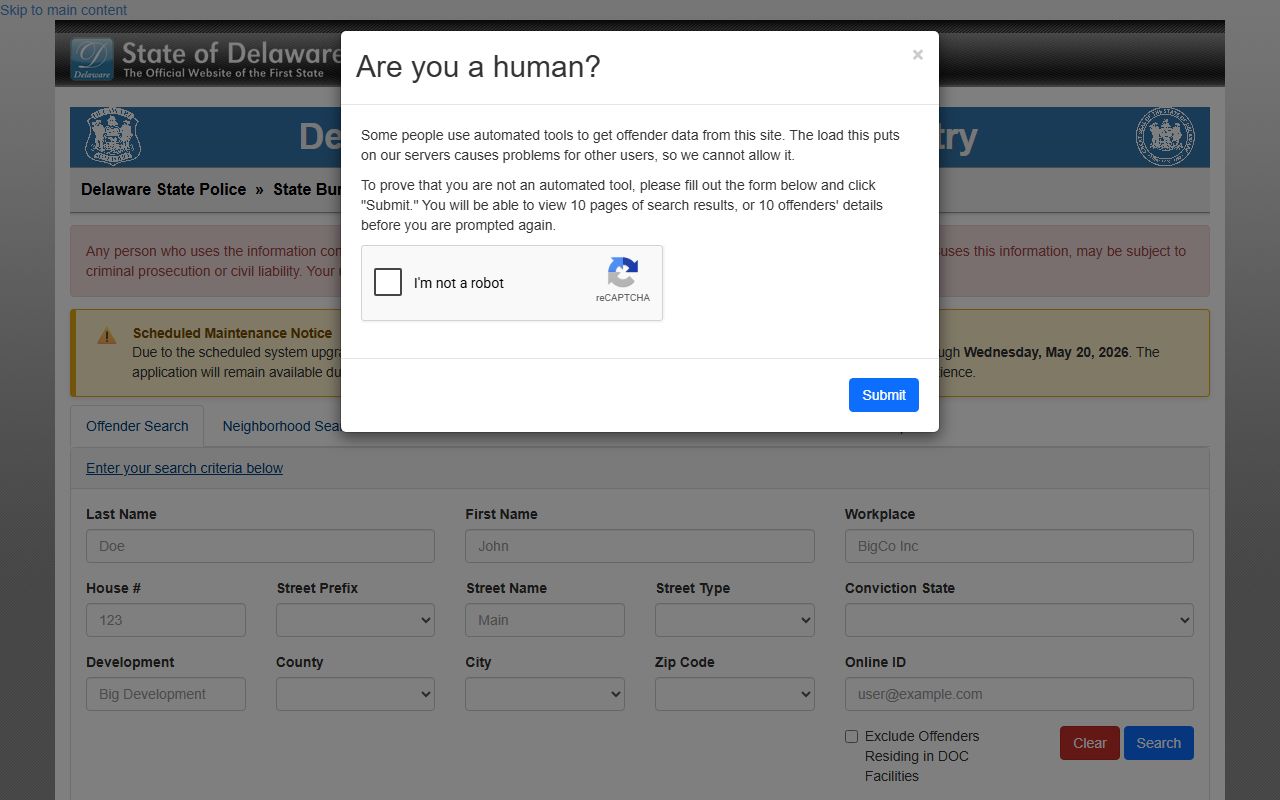
The registry is not a general warrant database for Sussex County, but it is the closest official wanted-list for the specific category of registry violations and absconders.
Sealed and Restricted Sussex County Warrants
Many Sussex County warrants are not public. Search warrants are routinely sealed before execution and may remain sealed while an investigation is active. The Delaware FOIA exemption for investigatory files compiled for civil or criminal law enforcement, in 29 Del. C. Chapter 100, supports that confidentiality. A search warrant affidavit may not be available even after execution if the case is still open.
Juvenile warrants in Family Court are restricted under the juvenile expungement and confidentiality provisions in Title 10. Grand jury material is not public. Federal warrants are not part of any Sussex County record at all. A warrant that does not appear in any public source is not the same as a warrant that does not exist.