
About the Sussex County Court of Common Pleas
The Court of Common Pleas is a statewide Delaware trial court that hears mid-level civil and criminal matters. It was created by statute in 1973 and became a constitutional court in 2005. The Sussex County branch shares the Sussex County Courthouse with Superior Court, so foot traffic, security, and parking advice for both courts overlap. The bench has grown in recent years. Judge Gerard M. Spadaccini was sworn in to a first term on September 4, 2025, joining the statewide roster.
Court of Common Pleas handles a wide slice of the Sussex County docket. Civil claims may go up to $75,000 in damages. Misdemeanor criminal cases are tried here, except for certain drug-related and traffic offenses that route elsewhere. The court also conducts preliminary hearings in felony cases before they move up to Superior Court, and it hears appeals coming up from the Justice of the Peace Court. The statewide Court of Common Pleas page lists docket search, e-filing, e-payments, criminal and civil procedures, traffic court services, bail, and specialty-court links.
Court of Common Pleas, Sussex County
Sussex County Courthouse
1 The Circle, Suite 1
Georgetown, DE 19947
302-858-5700
Hours: Monday-Friday 8:30 a.m. to 4:30 p.m.
Parking is limited. A small courthouse lot sits on East Pine and South Race Streets. Metered spaces are closest to the building, with non-metered street spaces farther down East Pine Street toward Union Cemetery. The Delaware Courts Sussex location index is the master listing for Common Pleas and every other state court in the county. The official Sussex County court locations page is a good starting point when visitors are not sure which Georgetown courthouse holds a case.
For visual confirmation of the Sussex County branch, the Delaware Courts site posts its own building page. A look at the official Court of Common Pleas Sussex location shows hours, phone numbers, and the courthouse map listing.
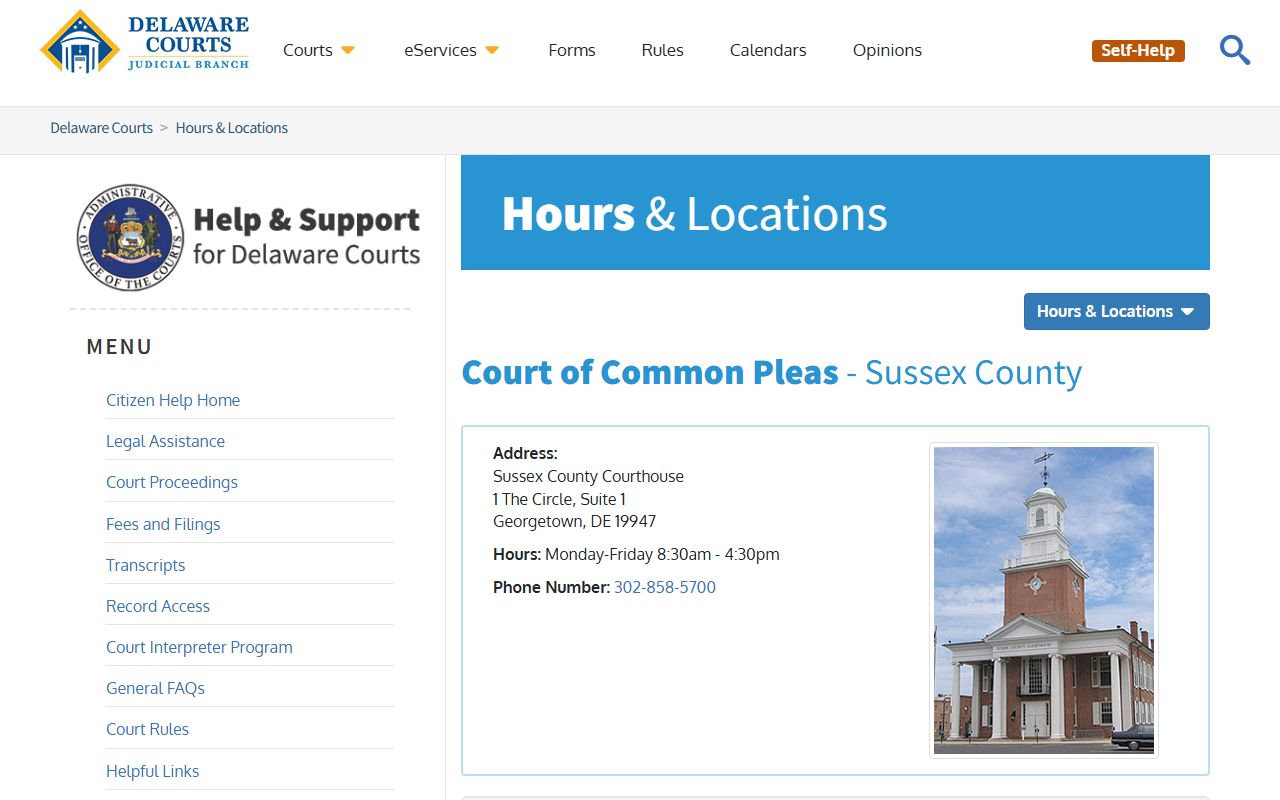
That same page also restates the Suite 1 entry detail for the Sussex County Courthouse, which is useful for first-time visitors trying to find the right door.
Note: Court of Common Pleas and Superior Court share the same Georgetown courthouse building, so confirm the suite number before each visit.
What the Sussex County Court of Common Pleas Handles
The court's jurisdiction reaches across civil, criminal, and traffic dockets, with a clear cap on damages and a clear list of offense types. Civil claims sit at the heart of the docket. The court hears actions where the amount in controversy does not exceed $75,000. Criminal cases are mostly misdemeanors. Felony preliminary hearings begin here, then move up to Superior Court for trial. Appeals coming from JP Court land in Common Pleas before they can move higher.
The statewide overview of every trial court is on the Delaware Judiciary overview page. That page makes it clear that Delaware does not use a county district court. Common Pleas is a state court that serves Sussex County alongside Kent and New Castle. For users coming from other states, that is the main thing to remember. The Delaware Code that creates and structures the state courts sits in Title 10 of the Delaware Code.
- Civil cases up to $75,000 in damages
- Misdemeanor criminal cases (with limited drug and traffic exceptions)
- Preliminary hearings in felony matters
- Appeals from Justice of the Peace Court
- Administrative motor vehicle and red light appeals
- Name change petitions and certain consumer debt actions
Sussex County Court of Common Pleas records cover a long list of case-type codes in CourtConnect. The "4" series is the Common Pleas family of codes. They show up on every docket report from the court.
Common Pleas Case Type Codes
Case-type codes are short labels used inside CourtConnect to identify the kind of matter on file. Knowing the code makes a name search far more useful, because the docket can be filtered down to the right kind of case. Common Pleas codes start with 4. Some of the most-used Sussex County codes are listed below.
| Code | Case Type | Notes |
|---|---|---|
| 4A | Debt | Common collections case |
| 4B | Breach of Contract | Civil contract disputes |
| 4C | CP Civil Case Types | Catch-all civil grouping |
| 4D | Interpleader | Money or property dispute resolution |
| 4E | Personal Injury | Within the $75,000 cap |
| 4L / 4M | JP Appeals (with / without fees) | JP cases moving up to CP |
| 4N | Change of Name Petition | Name change filings |
| 4P | Administrative MV Appeal | DMV decision review |
| 4Q | Red Light Appeal | Photo enforcement appeal |
| 4S / 4T | Seatbelt Appeals | With or without fees |
| 4X | Consumer Debt | Debt action subset |
| 4Y | Speed JP Appeal | JP speed case appeal |
| 4Z | Speed Case | Speed-related case file |
A user who picks "ALL" in the CourtConnect case-type dropdown may pull back broad results across many code groups. A user who narrows to one code may miss a related case filed under a different label. The smart move is to search broad first and then tighten down by case type, first name, and date range.
How to Search Sussex County Court of Common Pleas Cases
The official tool for a Sussex County Common Pleas case search is Delaware CourtConnect. CourtConnect covers all five Delaware trial courts and the Supreme Court. The system has three search choices, and the right one depends on what the searcher already knows. The disclaimer on CourtConnect is plain. Data is provided "as is," with no guarantee of completeness or timeliness, and the docket report is not for official use. Certified copies must come from the court clerk.
- Open Delaware CourtConnect and accept the disclaimer.
- Pick "Search by person name, business name or case type" when no case number is known. Pick the docket report when a case ID is already in hand.
- Enter Last Name or Company Name (required). Add first and middle name to narrow results.
- Optionally check Phonetic Search or Partial Last Name when spelling may vary.
- Set the Case Type to "ALL" or to a 4-series Common Pleas code, depending on how much is known.
- Add filing-date ranges in DD-MON-YYYY format (for example, 01-JAN-2025). The form does not accept numeric months.
- Submit. Review results for matching parties. Pull the docket report by Case ID if more detail is needed.
- For documents or certified copies, route the request through the Sussex County Court of Common Pleas clerk counter on The Circle.
For Sussex County Court of Common Pleas records search work that needs more than docket-level data, plan to visit the courthouse or contact the clerk by phone. CourtConnect data is searchable but is not the full file.
CourtConnect Search Fields
The Person/Business/Case Type search form has a strict layout. Knowing each field before searching saves time and avoids "no results" errors caused by date format problems or unchecked partial-name boxes.
| Field | Type | Required | Notes |
|---|---|---|---|
| Check for Phonetic Search | checkbox | No | Sound-alike name match |
| Check for Partial Last Name | checkbox | No | Allows partial spelling |
| Last Name or Company Name | text | Yes | Up to 60 characters |
| First Name | text | No | Up to 15 characters |
| Middle Name | text | No | Up to 15 characters |
| Beginning Case Filing Date | date | No | DD-MON-YYYY format |
| Ending Case Filing Date | date | No | DD-MON-YYYY format |
| Case Type | dropdown | No | Defaults to ALL |
The docket report form is shorter but stricter. It requires an exact Case ID and accepts optional docket-filing start and end dates. A user who only has a name should always run the person search first, capture the Case ID, then move to the docket report.
Sussex County Court of Common Pleas Specialty Courts
Court of Common Pleas runs problem-solving dockets aimed at non-violent offenders and DUI cases. The statewide page lists a Drug Diversion Program for eligible non-violent offenders and a separate DUI Court. Both are alternatives to a straight criminal trial track for defendants who qualify. Eligibility and length depend on the case, the prior record, and the program rules.
Specialty courts try to reduce repeat offenses. The Drug Diversion Program is built around treatment and supervision. DUI Court targets people charged with driving under the influence, with focused monitoring and structured court contact. The official Delaware Courts traffic help page covers ticket payment paths and what to do when a traffic case lands in Common Pleas.
Sussex Sussex County Court of Common Pleas records for these specialty programs do still appear in CourtConnect, but the case-type codes and disposition language may look different from a standard misdemeanor or civil docket. The Delaware Code Title 11 Chapter 43 on sentencing, probation, and parole governs many of the post-disposition conditions that follow a specialty court case.
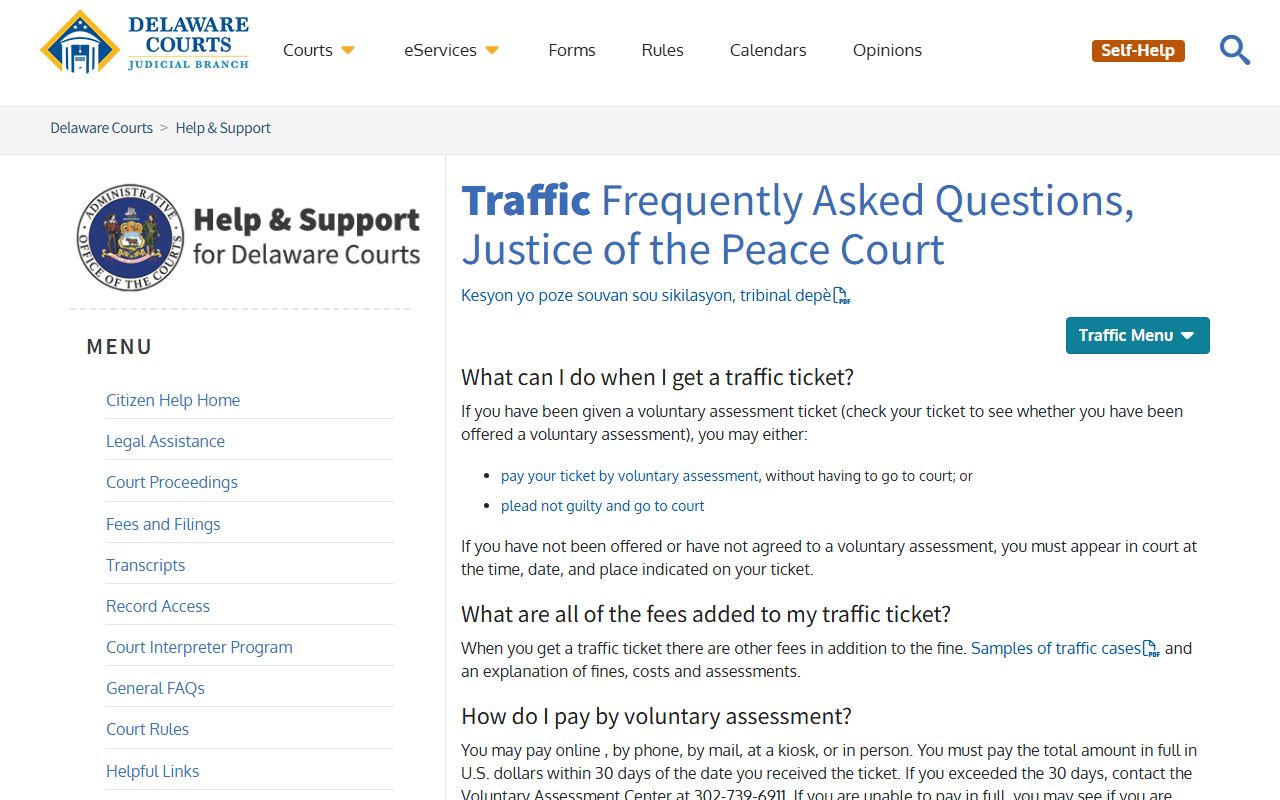
For background context on Delaware's traffic case flow, the official page is a clean reference for users who land at Common Pleas after a JP appeal or a citation upgrade.
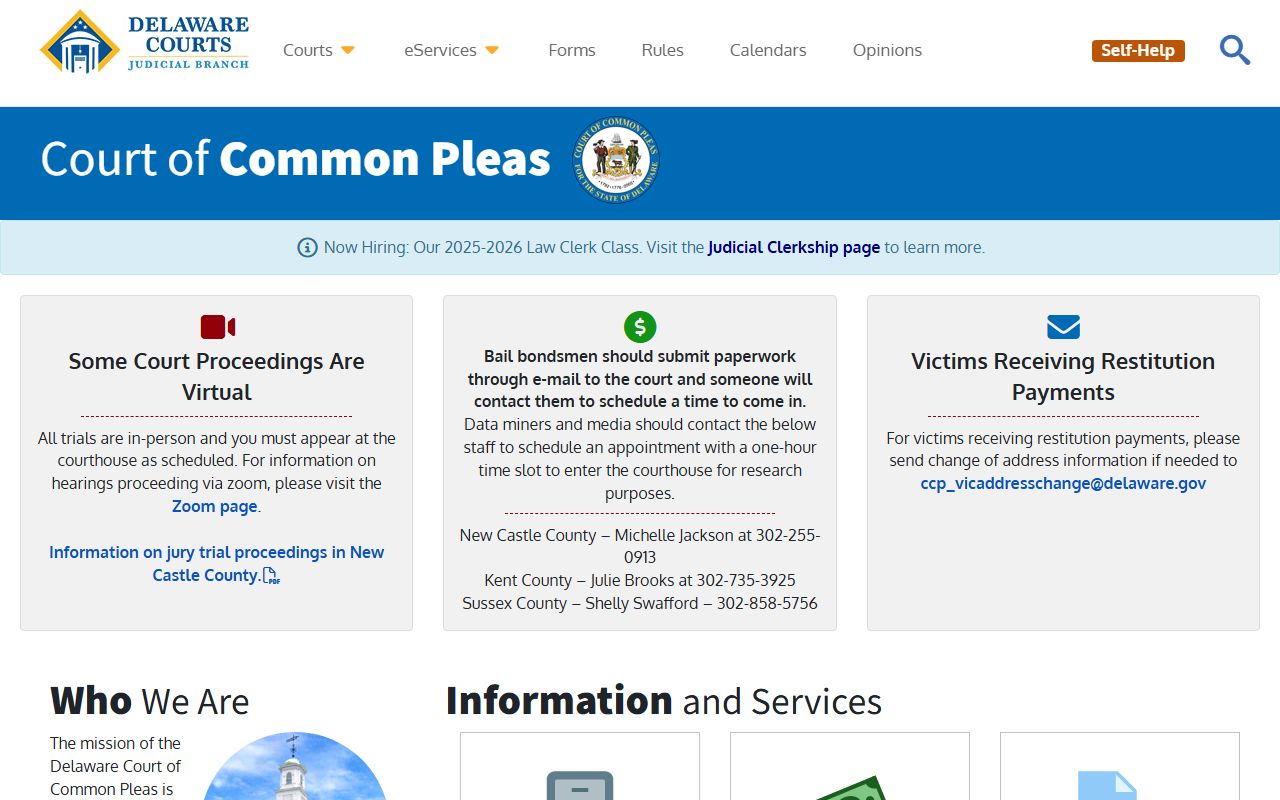
The statewide Common Pleas page is the main jumping-off point for anyone who wants to see the full menu of services, including bail, mediation, and ePayment.
The page should be the first stop for any reader who still has questions after reading a county-specific record summary.
Note: Specialty court eligibility depends on the charge, the criminal history, and program capacity, so always confirm placement directly with the court.
Court of Common Pleas vs Other Sussex Courts
Picking the right court matters because the same facts can land in different places. Common Pleas sits in the middle. The chart below compares it with the courts that flank it.
| Feature | Court of Common Pleas | Justice of the Peace | Superior Court |
|---|---|---|---|
| Civil cap | Up to $75,000 | Up to $25,000 | No monetary maximum |
| Criminal scope | Most misdemeanors | Limited misdemeanors and traffic | Felonies and most drug offenses |
| Felony role | Preliminary hearings only | Committing magistrate | Trial court |
| Appeals received | JP appeals | None up | CP appeals; Family criminal |
| Sussex location | 1 The Circle, Suite 1, Georgetown | Multiple Sussex JP courts | 1 The Circle, Suite 2, Georgetown |
Users with a JP case should also look at the Justice of the Peace Court page for entry-level information. Cases moving up the ladder may pass through Common Pleas on the way to Superior Court.
Sussex County Common Pleas Traffic Cases
Common Pleas hears a slice of the traffic docket that does not stay in JP Court. Speed JP appeals, seatbelt appeals, red light appeals, and DMV decision appeals all get a Common Pleas case-type code. Many of these reach Common Pleas after a JP loss. Others, like an administrative motor vehicle appeal, start here as the first court of review.
For DUI specifically, JP 14 in Georgetown is the Sussex JP location labeled "Criminal/DUI," but the case may move up. Common Pleas DUI Court is the structured alternative track for eligible defendants. Information on DUI as a criminal traffic offense, rather than a simple civil ticket, lives on the traffic court records page and on the broader criminal records page.
Traffic fines and contested traffic tickets often involve both court and DMV records. The court record shows the citation, charge, plea, disposition, and fine. The Delaware DMV holds the driver license record separately, with reported convictions, points, and license status. These are different files with different access rules.
Federal Court Context
Common Pleas does not hear federal cases. A Sussex County resident may still end up in a federal court if the case involves federal law, bankruptcy, civil rights claims, patent matters, or certain agency disputes. Federal cases for Delaware are heard in Wilmington, not Georgetown.
The U.S. District Court for the District of Delaware is the main federal trial court, with PACER access for case lookups.
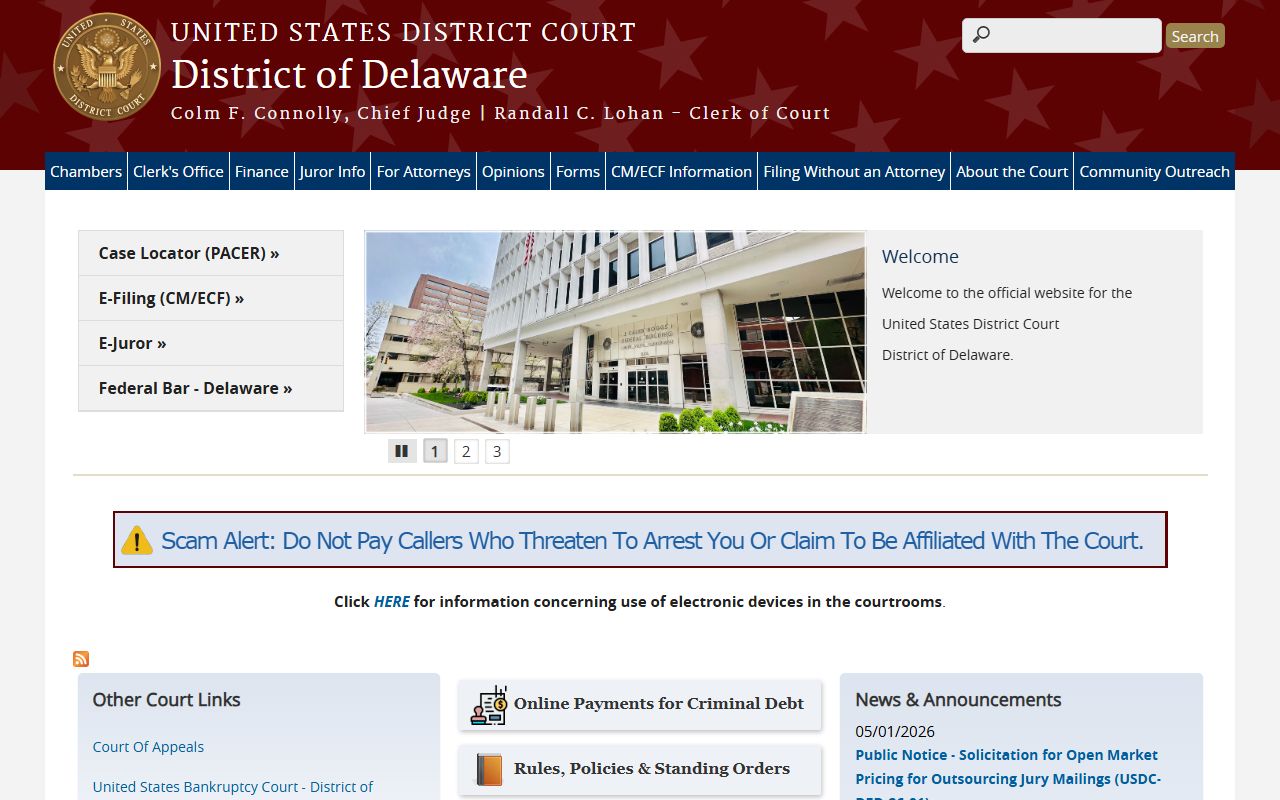
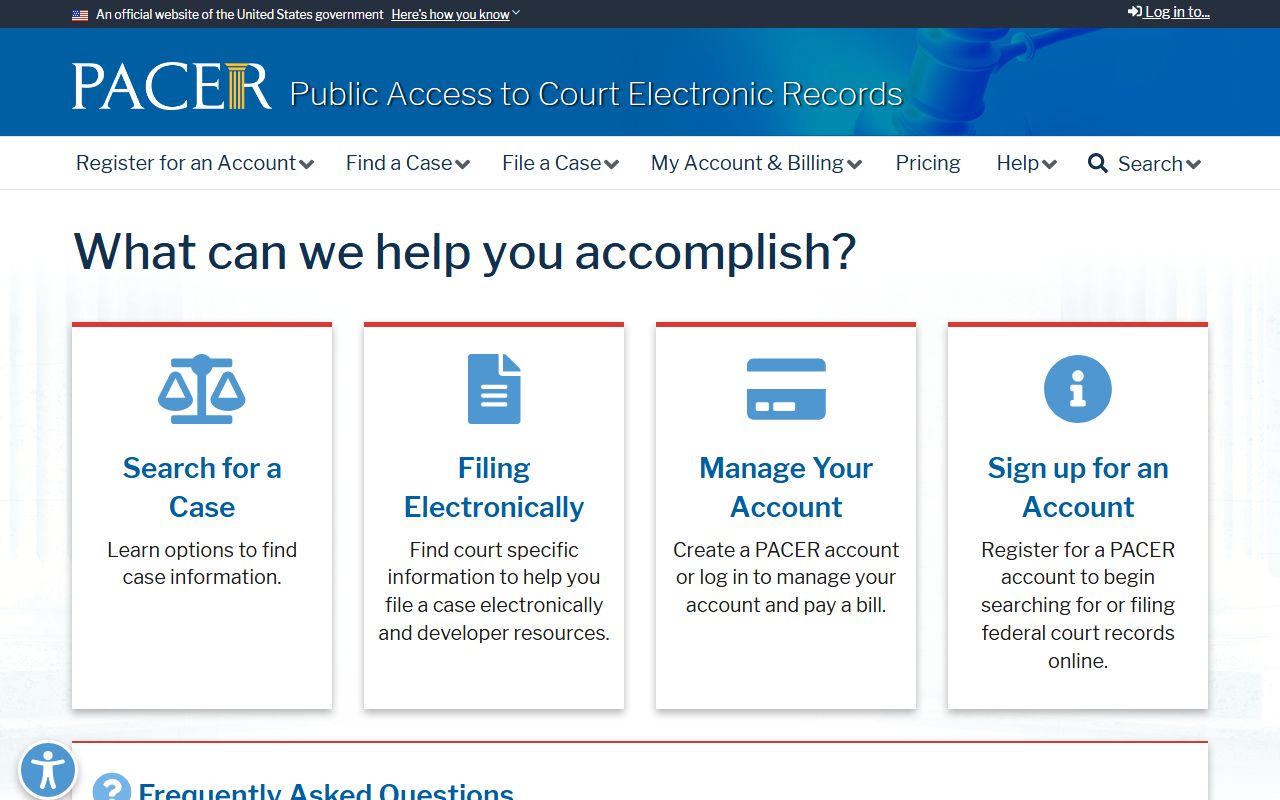
Federal docket access goes through PACER, the Public Access to Court Electronic Records system, which requires a free account and may charge per-page fees for document retrieval.
Sentencing rules for state criminal cases in Common Pleas come from Delaware Code Title 11. The chapter on sentencing, probation, and parole is the main reference point for adult criminal dispositions.
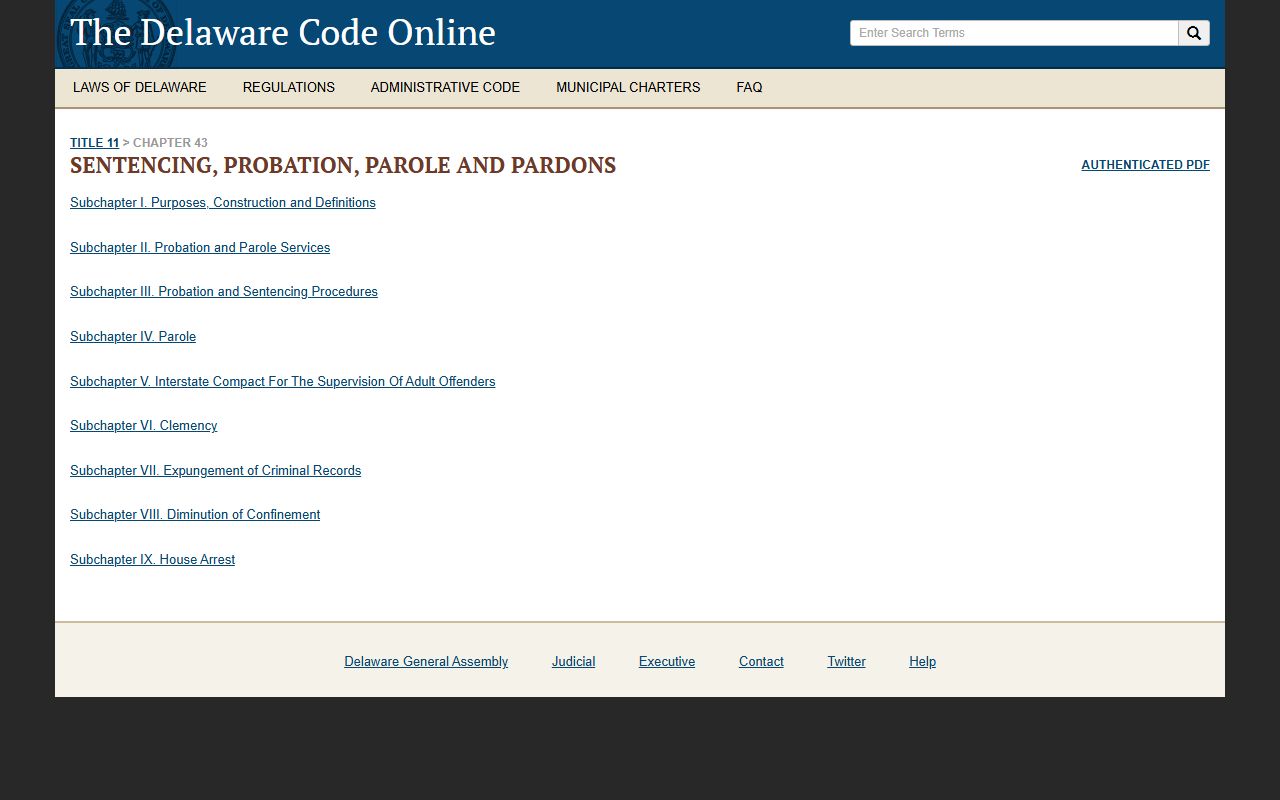
The Delaware code reference is useful when a docket report shows a sentencing label that needs explanation.