
Delaware FOIA and Sussex County Records
Delaware FOIA is the public-records framework that covers Sussex County government. It sits in 29 Del. C. Chapter 100. The chapter declares that public business must be performed openly, and that citizens must have easy access to public records and meetings. Sussex County is bound by Chapter 100 and by the county's own FOIA policy, which spells out how requests are routed inside county government.
The core sections worth knowing are §10001 (declaration of policy), §10002 (definitions and the long list of exemptions), §10003 (examination and copying, plus a duty to provide reasonable assistance), and §10005 (enforcement). Not every record held by a county office is a public record. The definitions section is exemption-heavy. Personnel and medical files, pupil files, investigatory law-enforcement files, trade secrets, and adoption or child custody files are common categories that fall outside the access right even when the rest of a file is open.
Court records work under a different framework. Delaware Judiciary uses its own access rules, court rules, and case-specific confidentiality statutes. A Sussex County FOIA request will not pull a Family Court file. For state DOC records, custody status is searched through state systems, not through a county FOIA request.
Three Lanes of Sussex County Public Records
Records about Sussex County fall into three broad lanes. The lane decides the office, the law, and the request channel. Picking the wrong lane is the most common reason requests get bounced back.
- County administrative records: budgets, departmental files, county-level emails, contracts, planning and zoning files, county council records. These run through Sussex County FOIA under 29 Del. C. Ch. 100.
- State court records: case files, dockets, orders, hearing transcripts. These follow Delaware Judiciary policies and court-specific rules. For a search starting point, see court records.
- State DOC and State Bureau of Identification records: inmate custody data and criminal-history records. Custody status uses VINELink through the state DOC. Criminal-history dissemination is governed by 11 Del. C. Ch. 85.
The same person may need files from more than one lane in a single project. A property dispute, for example, can pull in a county zoning file, a Superior Court civil docket, and a Recorder of Deeds record at the same time.
What the County Offices Hold
Several county offices keep their own public records under their own statutory authority. A FOIA request to the central county coordinator is generally enough to reach multiple departments, but knowing the underlying offices helps frame the request.
- Recorder of Deeds: deeds, mortgages, releases, and recorded instruments. The Recorder is Alexandra Reed Baker. Online deeds search runs at deeds.sussexcountyde.gov.
- Marriage Bureau (Clerk of the Peace): marriage licenses and certified marriage copies for Sussex-issued licenses. Detail sits on the Clerk of the Peace page.
- Register of Wills: estate files, wills, short certificates, inventories, accountings. Detail sits on the Register of Wills page.
- Sheriff: process service records and sheriff sale records. The Sheriff does not run a county jail in Delaware's unified system.
- Sussex County Administrative Offices: county council files, budget files, planning and zoning files, paramedics, and other county departments.
The FOIA coordinator at the county will direct a request to the right custodian. The same FOIA submission usually works for records that span more than one department, so duplicate requests to each office are not needed.
How to File a Public Records Request in Sussex County
Sussex County publishes more than one channel for FOIA submissions. The FOIA Coordinator is Casey Hall. Any of the channels below is valid; the online portal is the fastest for routing.
- Identify the office and the record. Routine information may already sit on the county website or be available by a short call to the office. A FOIA request is for records that are not already posted.
- Open the online portal at sussexcountyde.mycusthelp.com. Fill out the requester contact information and a clear description of the records sought.
- If a paper form fits better, download the county FOIA PDF and email it to casey.hall@sussexcountyde.gov, fax it to 302-855-7749, or mail it to Sussex County Government, ATTN: Casey Hall, Sussex County FOIA Coordinator, PO Box 589, Georgetown, DE 19947.
- In-person submission goes to the Sussex County Administrative Offices at 2 The Circle, Georgetown. Bring an extra copy of the request for the desk.
- Wait for the FOIA Coordinator to route the request to the custodian department and respond on the statutory timeline. Pay any FOIA fees before files are released, and follow up if the response window passes without contact.
FOIA questions about the process can also go through the County Administration line at 302-855-7742. The MyCustHelp portal is the standard route for most users.
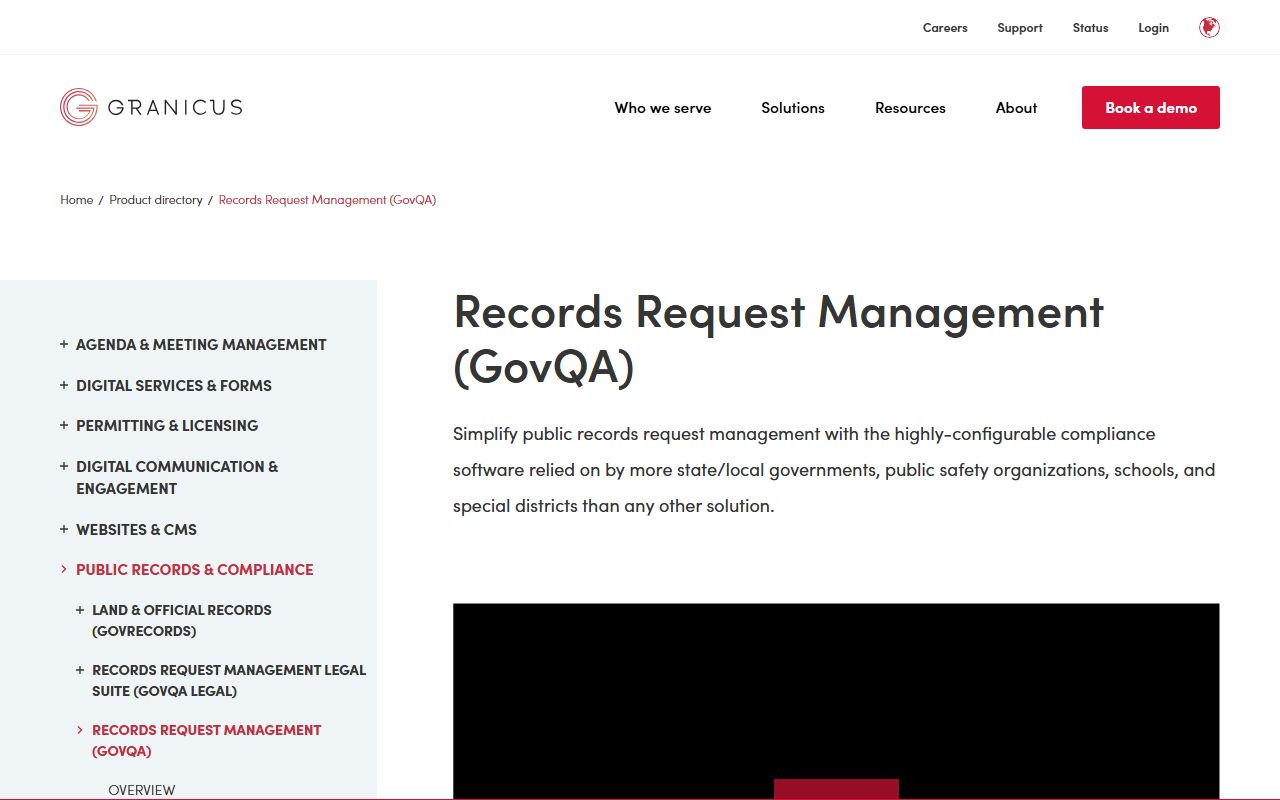
The portal walks the requester through the same fields used on the paper form, then assigns a tracking number for follow-up.
Sussex County FOIA Request Form Fields
The official Sussex County FOIA submission asks for a small set of basic fields. The list below is the captured field inventory from the county FOIA process. Exact field labels can vary by channel.
| Field | Required | Notes |
|---|---|---|
| Requester contact information | Likely yes | Online portal hosted at MyCustHelp; paper form has matching fields. |
| Description of records requested | Yes | Identify the records sought clearly; the coordinator routes the request from this text. |
| Delivery or contact method | Unspecified | Online, email, fax, mail, or in person all accepted. |
| Department or custodian | Unspecified | One FOIA submission generally covers requests that span more than one department. |
| Signature and date | Likely yes | Used on the PDF, fax, mail, or in-person form. |
Response Timelines and Cost
Delaware FOIA sets the timeline framework for response. Public bodies must provide reasonable assistance during examination and copying under 29 Del. C. §10003. A request can take longer when the records span more than one department, when records need redaction under exemptions, or when an extension is permitted under the statute. Sussex County's FOIA policy sets the local procedures inside the statutory framework.
FOIA fees are governed by public-body policy and the statutory reasonableness standard. The county does not publish a fixed per-page rate captured in this research pass. Confirm fees with the FOIA Coordinator before paying, and ask whether labor, copy, or electronic-delivery fees apply to the request.
Sussex County FOIA Fee Note
A clean per-page fee schedule for Sussex County FOIA was not captured in the official source pages reviewed. The table below is honest about the gaps. Use the contact details from the coordinator to verify the current rates before payment.
| Item | Amount |
|---|---|
| Per-page copy | Not posted in captured sources; confirm with FOIA Coordinator. |
| Labor or search per hour | Not posted in captured sources. |
| Electronic delivery | Not posted in captured sources. |
| Fee waiver | Delaware FOIA allows waivers in some cases; ask in the request. |
Note: The county pulls FOIA work from line staff, so high-volume requests often run longer than a small targeted request.
Records That Are Exempt
Delaware FOIA exemptions sit in 29 Del. C. §10002. The list is long and worth a quick read before filing a broad request. Common exemptions include personnel files where disclosure would invade privacy, medical and pupil files, investigatory files compiled for civil or criminal law enforcement, trade secrets and confidential commercial or financial information, adoption and child custody files where no criminal complaint is at issue, and several other categories. A record can be partly open and partly exempt; the custodian can release the open portion with redactions.
Court records sit outside the FOIA exemption analysis because they are not held by an executive or local public body. Court-records access uses court policies and case-specific rules. For a search starting point on case files, see court records and the Prothonotary page.
If Your Request Is Denied
FOIA enforcement is in 29 Del. C. §10005. The statute gives a route to challenge a denial through the Delaware Department of Justice or by petition. The first step is to read the denial. The custodian must usually point to the exemption that supports withholding. A denial based on a real exemption is harder to challenge than a denial based on form, scope, or missing description.
The Delaware FOIA statute and its enforcement framework live on the same code page.
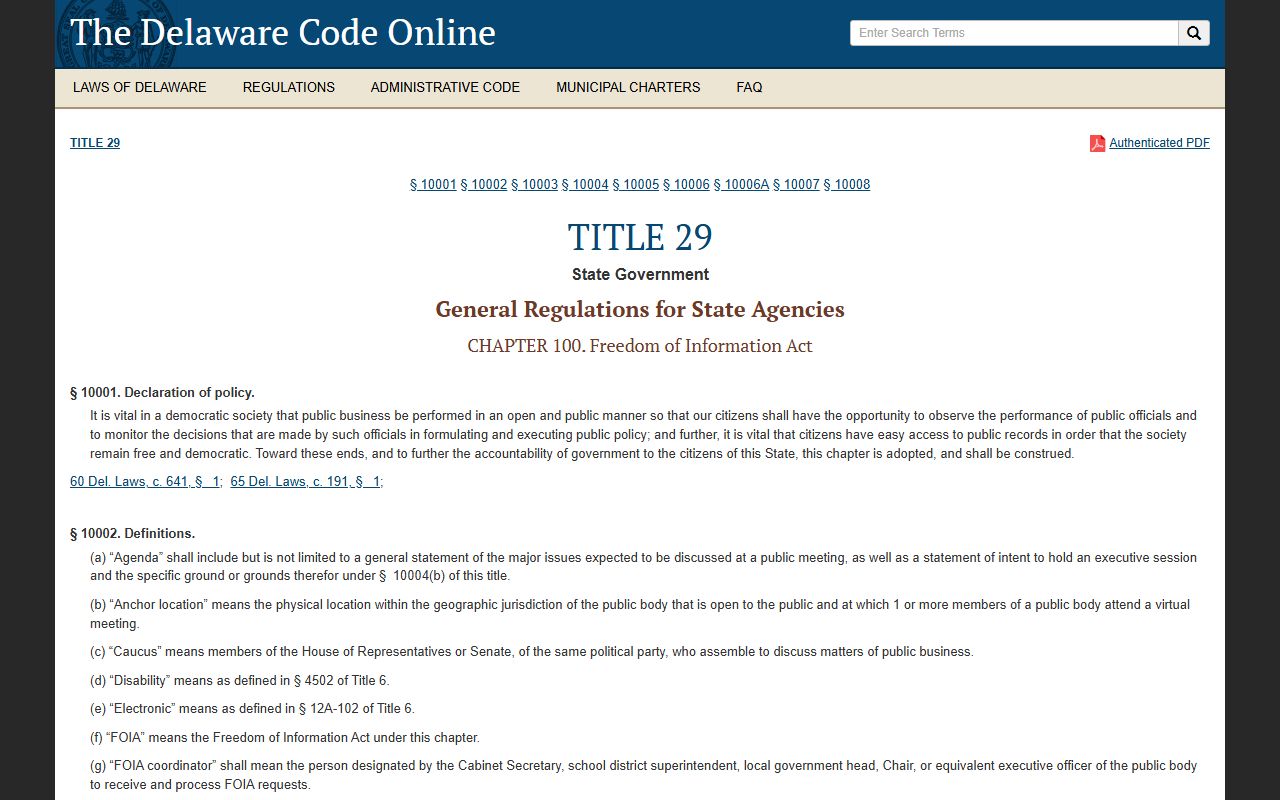
That code page is the official source for the request, denial, and appeal rules described above.
Court Records, Not County FOIA
Court files are a separate lane. Family Court files in Sussex are reviewed in the Family Court records room with staff supervision, under the Family Court records access process. Superior Court files run through the Prothonotary office at the Sussex County Courthouse. Register in Chancery handles Chancery filings at 34 The Circle. Sussex County FOIA staff cannot pull or copy court files for a requester.
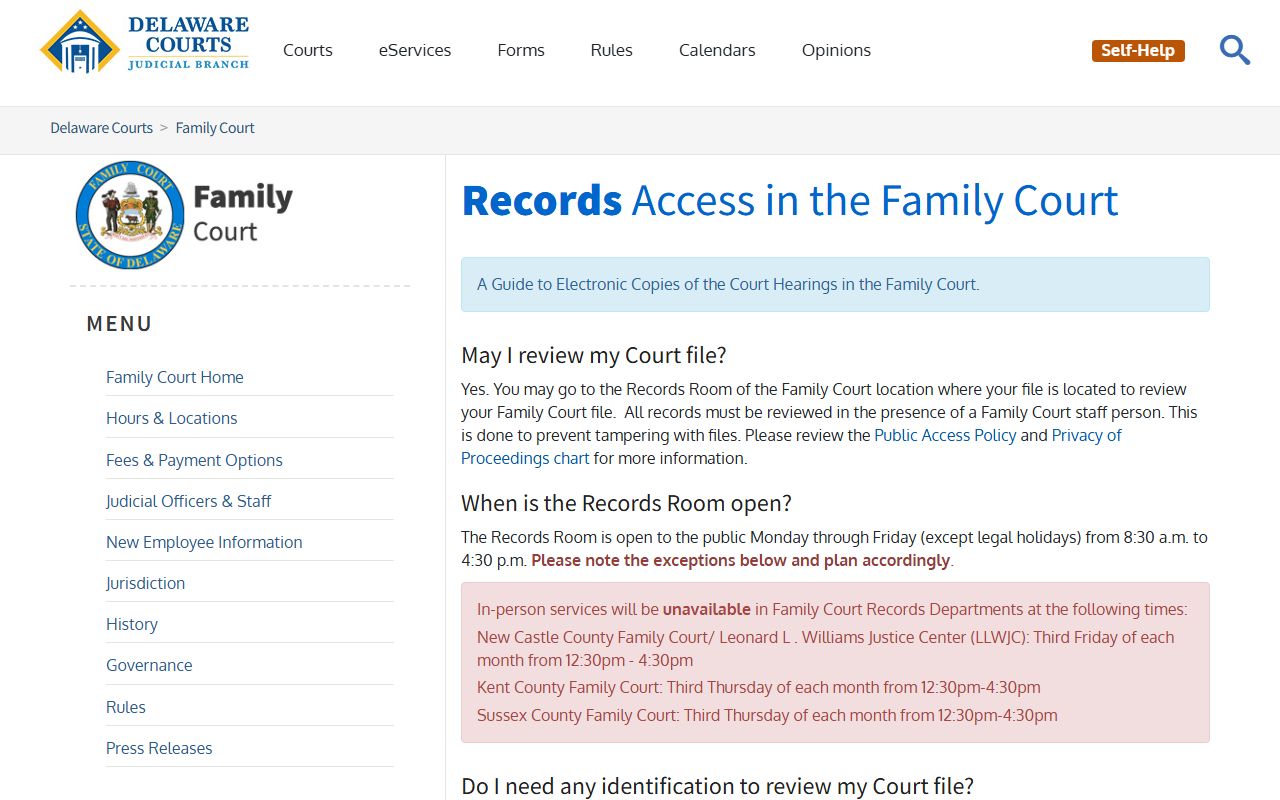
The Family Court records access page sets out the supervised-review rule and lists what kinds of documents can be requested through Family Court rather than through a county FOIA submission.
Sussex County also hosts a public Law Library inside the Family Court Courthouse, run by law librarian Margaret L. Naylor. The library is a research stop, not a records office, but it is useful for self-represented requesters working with court rules and statutes.
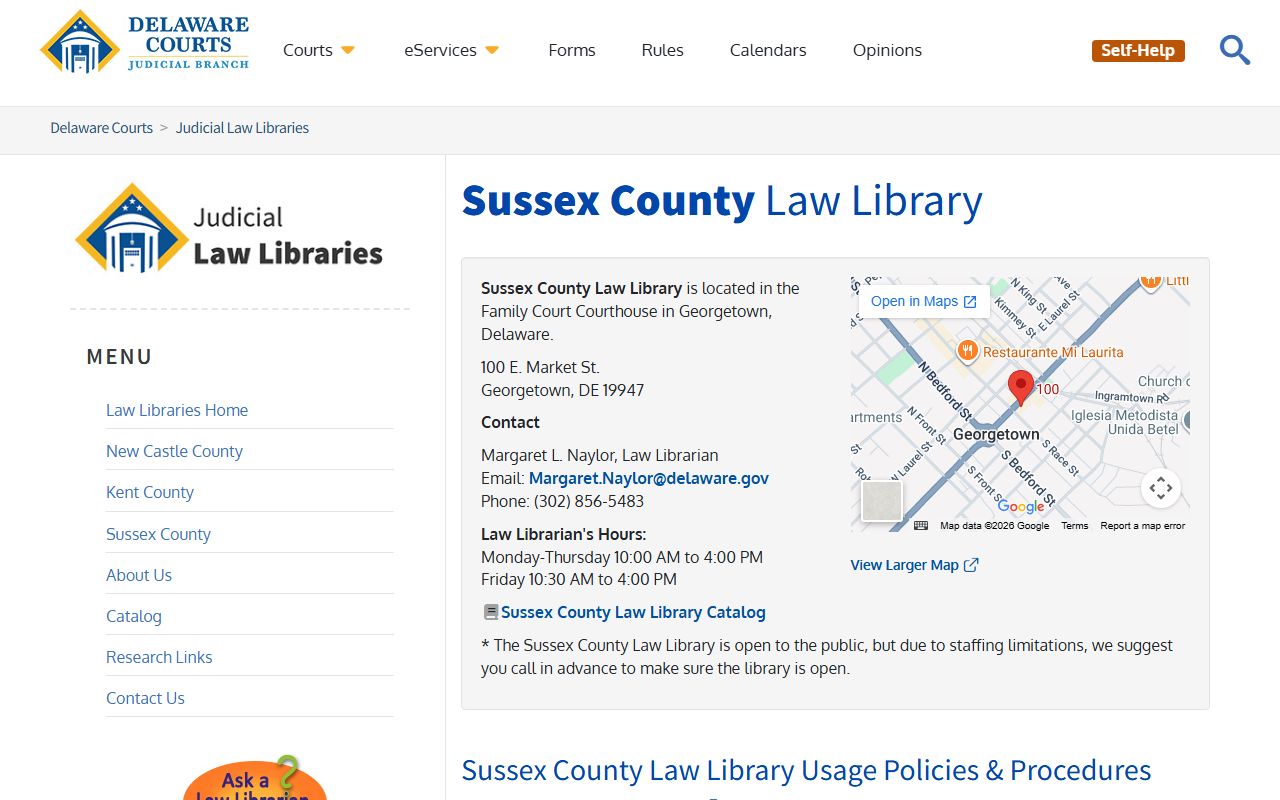
The library publishes hours and a contact number; staffing is limited, so a call ahead is the right move.